Have you ever been so bored that you wrote yourself a letter, mailed it, and tried to be surprised when it showed up in your mailbox? James Perrott of Chagford, England was a guide who led adventurous visitors across the Dartmoor wilds in the 1800’s. Dartmoor was (and still is) a boggy expanse dotted with hills topped with outcrops of bedrock that attracted (and still does) nature-lovers looking to commune. Most of it was pretty dangerous for the average hiker back then so James offered his knowledge of the local routes and points of interest.
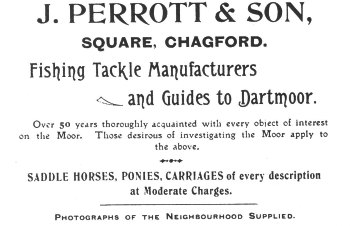
In 1854, he piled up a bunch of rocks out in the moor and stuck a bottle on it. The intent was to have travelers place their calling cards inside…a much cooler version of putting your business card in a bowl in hopes of a free burrito. Eventually somebody added a visitor’s book and eventually a stone box was constructed in order to protect the contents from the muggy climate. This began the world-wide hobby of Letterboxing…searching for treasure via clues left by previous visitors.
Today, Letterboxing has a large community of enthusiasts who both like to hide and seek. Several websites host clues, discussions, and a community for those folks and are generally very welcoming to new fans of the hobby. Do note that there is a Code of Conduct to this pastime. Safety is always a concern so be aware of your surroundings; you shouldn’t cross into private property to reach your particular goal because that’s quite illegal. Explorers also tend to be mindful of the environment because like hiking, it is expected that no trace is left…other than a colorful stamp which you’ll read about later. Nobody wants to find rudely discarded bottles and granola wrappers on their adventures. Finally, keep an eye on the local flora and fauna. Poisonous plants and venomous animals love to letterbox also, not to mention the huge Bear Letterboxer Community.
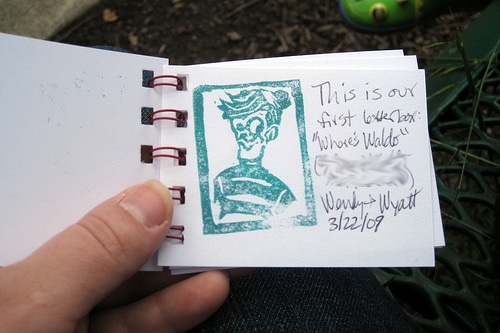
A huge part of the Letterbox hobby adds some personal flair. Inside the secret cache is usually a logbook which visitors mark their passing. This is often in the form of a pressed-image stamp. This ranges from a store-bought Hello Kitty to family crests and personal logos. The most popular method is to carve your own stamp from rubber that takes a bit of crafting , a bit of creativity, and a bit of flair. These intrepid explorers bring the stamp, ink, spare notebooks, and some ratty old clothes suitable for entering the Moors.
Back when letterboxing began, hikers would leave letters and postcards in hidden areas in the hopes somebody would find it and mail it off. Sometimes they were self-addressed and it would be delivered months or years later as a sort of message from the past. Modern enthusiasts have a more speedy gratification; finding that logbook, looking over the inked images of previous explorers, and adding their own. It’s a nifty low-tech hobby that gets you out into the world with an eye for the hidden treasures out there.
 This Is Boring